Is your business ready to go white-label?

SaaS platforms, marketplaces, vertical software, and digital services are increasingly baking financial features straight into the product: accounts, payments, cards, and the workflows around them. When it clicks, Banking-as-a-Service (BaaS) can deepen customer dependence on your platform, open new revenue lines, and make switching away genuinely painful.
But there’s a flip side. Go too early and you don’t get a growth engine; you get a new category of complexity causing compliance pressure, operational burden, and cost surprises.
If you’re kicking off the year planning to move fast and launch white-label financial services, especially cross-border in Europe, you’re stepping into a high-stakes arena. Usage is accelerating. Fraud dynamics are evolving. Regulators are expecting maturity, not experimentation.
This quiz is here for one purpose – to help you answer the uncomfortable question upfront: are you truly ready to go white-label, or just drawn to the upside?
How this quiz works (and how to read your score)
This is a quick readiness check, not a trick test. For each question, pick the answer that matches how your business runs today (not how you want it to run by year-end). Then total your points:
Yes = 2 points
Maybe = 1 point
No = 0 points
At the end, you’ll have a clear signal: ready, close, or not yet.
1) Do you control meaningful transaction volume today?
BaaS doesn’t create usage out of thin air. It amplifies what you already own.
If your product sits in the “money moment” (checkout, payout, invoices, subscriptions, expenses), you have something to build on. In the euro area alone, non-cash payments reached 77.6 billion transactions in the second half of 2024, with cards accounting for 57% of volume. Scale is there, but only for platforms that sit directly in the flow.
Yes, if:
- Payments are already central to your user workflow.
- You process consistent, repeat transaction volume.
- Financial activity scales as your core product scales.
Maybe, if:
- Volume is growing, but payments are still peripheral.
No, if:
- Payments happen outside your platform or via redirects.
If you don’t own the transaction moment, white-label banking won’t fix that; it will just add unnecessary complexity.
2) Is finance mission-critical to your customer experience?
The strongest BaaS platforms own financial workflows and focus on addressing customer needs: faster payouts, fewer failed payments, clean reconciliation, clearer cash visibility, and less manual work.
Yes, if:
- A broken payment or account flow would directly impact retention.
- Customers ask for financial features proactively.
- Your team has already identified financial functionality as a product priority.
Maybe, if:
- You can see demand, but it hasn’t been turned into a real workflow yet.
No, if:
- Finance is still treated as an external utility.
3) Can your tech and product teams support regulated infrastructure?
BaaS is not a single API integration. It’s an ongoing system with real operational consequences. It comes with ongoing responsibilities: onboarding flows, permissioning, monitoring, incident handling, partner coordination, and security controls that have to hold up under pressure.
Yes, if:
- A product owner is accountable for financial features end-to-end.
- Engineering can support multi-quarter delivery (not just a sprint).
- Reliability and security are treated as core product requirements.
Maybe, if:
- You can ship fast, but operational robustness is still catching up.
No, if:
- The team is already stretched just keeping the core platform stable.
4) Are you operationally ready to “own” the financial experience?
In a BaaS model, customers don’t distinguish between you and your partners. They don’t email your issuer. They message your support. They expect you to resolve chargebacks, onboarding issues, verification questions, failed payments, and delays.
Yes, if:
- You have defined SLAs and escalation paths.
- Support teams are trained on financial workflows.
- You understand fraud, disputes, and risk basics.
Maybe, if:
- Support is strong but finance expertise is still forming.
No, if:
- Operations are informal or undocumented.
5) Does your platform have the right market positioning?
White-label banking only works when there’s a clear answer to “Why you?” McKinsey estimates that in 2024, up to 65% of international P2P transfer value was captured by non-traditional providers, which is proof that distribution power is shifting toward platforms, not banks.
A platform wins here when financial services reinforce the value it already owns: distribution, trust, and a workflow users rely on. If finance feels like a detour, customers sense it.
Yes, if:
- You serve a clear niche or vertical with repeated use cases.
- Users already trust you with critical workflows.
- Embedded finance makes your core product more valuable, not more confusing.
Maybe, if:
- The opportunity is real but the narrative isn’t sharp yet.
No, if:
- You’re considering BaaS mainly because competitors are doing it.
Your score and what it means
8-10 points: You’re ready
You’re operating close to “financial-grade” already. Your next step is partner selection and architecture: pick a BaaS provider that won’t bottleneck you later, and design for scalability from day one.
Focus on:
- Choosing the right BaaS partner
- Designing for multi-market growth
- Avoiding rework as volume and complexity rise
5-7 points: You’re close
You have momentum and a real business case, but a few gaps could become expensive later if you ignore them now.
Typically, the missing pieces are:
- Operational ownership and escalation
- Technical robustness and monitoring
- Compliance and risk process maturity
The upside: close these intentionally, and you can move forward without stepping on the common landmines.
0-4 points: Not yet
That’s not failure, it’s a signal. It means embedding finance now would likely create drag: more support load, more risk, more operational overhead without enough usage to justify it.
Prioritize:
- Owning the workflow first
- Growing repeatable financial activity
- Building operational maturity
Then revisit BaaS when finance becomes a natural extension, not a forced add-on.
Where Satchel fits in: A BaaS foundation built for scale
Launching white-label financial services doesn’t mean becoming a bank, but it does mean building on a foundation that can take pressure.
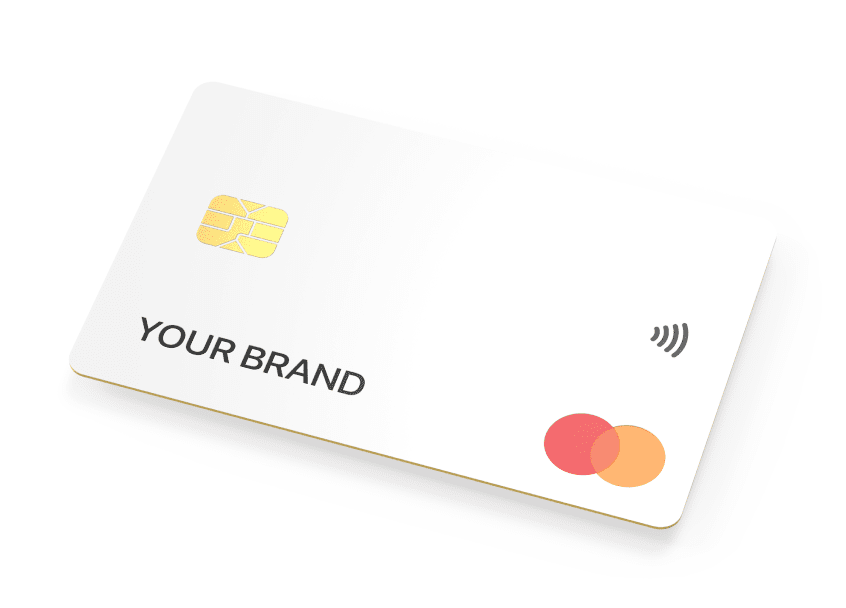
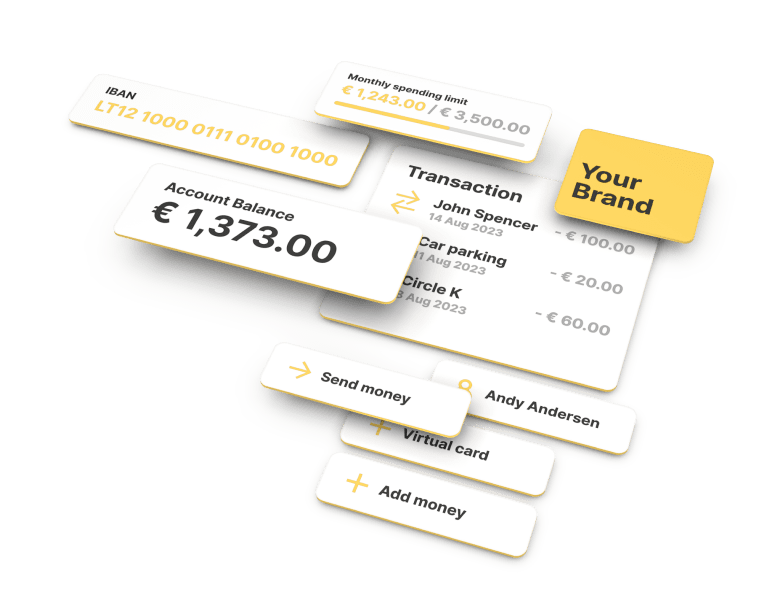
The Satchel Banking-as-a-Service (BaaS) offering provides a regulated, production-ready way to embed financial capabilities into your product. Through a single framework, Satchel enables IBAN accounts, payment rails, and card issuing, designed for cross-border use from day one.
Client funds are held in segregated accounts at the Bank of Lithuania, providing a strong compliance baseline. And because the Satchel BaaS is designed for cross-border use, you can support real customers across markets while keeping the underlying architecture clean and scalable.
In short: Satchel helps you launch, test, and scale real financial services without rebuilding the entire financial stack, enabling your team to focus on differentiation, distribution, and growth.
The final word
White-label banking is a serious move and a powerful lever when pulled at the right moment.
The winners in BaaS don’t rush blindly and don’t overthink forever. They build the foundations early, so that when they launch, finance strengthens the product instead of stretching the business.
This quiz is designed to give you clarity and sharpen your timing. If you scored “ready,” you have a clear path forward. If you scored “close,” you know what to fix before you commit. If you scored “not yet,” you just saved yourself from learning the hard lessons the expensive way.
Prepare thoroughly. Build with confidence. And when you’re ready, move decisively.